
Hire a sound engineer
Even when the technical setup is right beforehand, things can still shift during a programme: a speaker who talks softly, a microphone that starts to feed back, music that is turned up too loud. A sound engineer catches all of that. We provide an experienced engineer who builds, mixes and continuously monitors the audio.
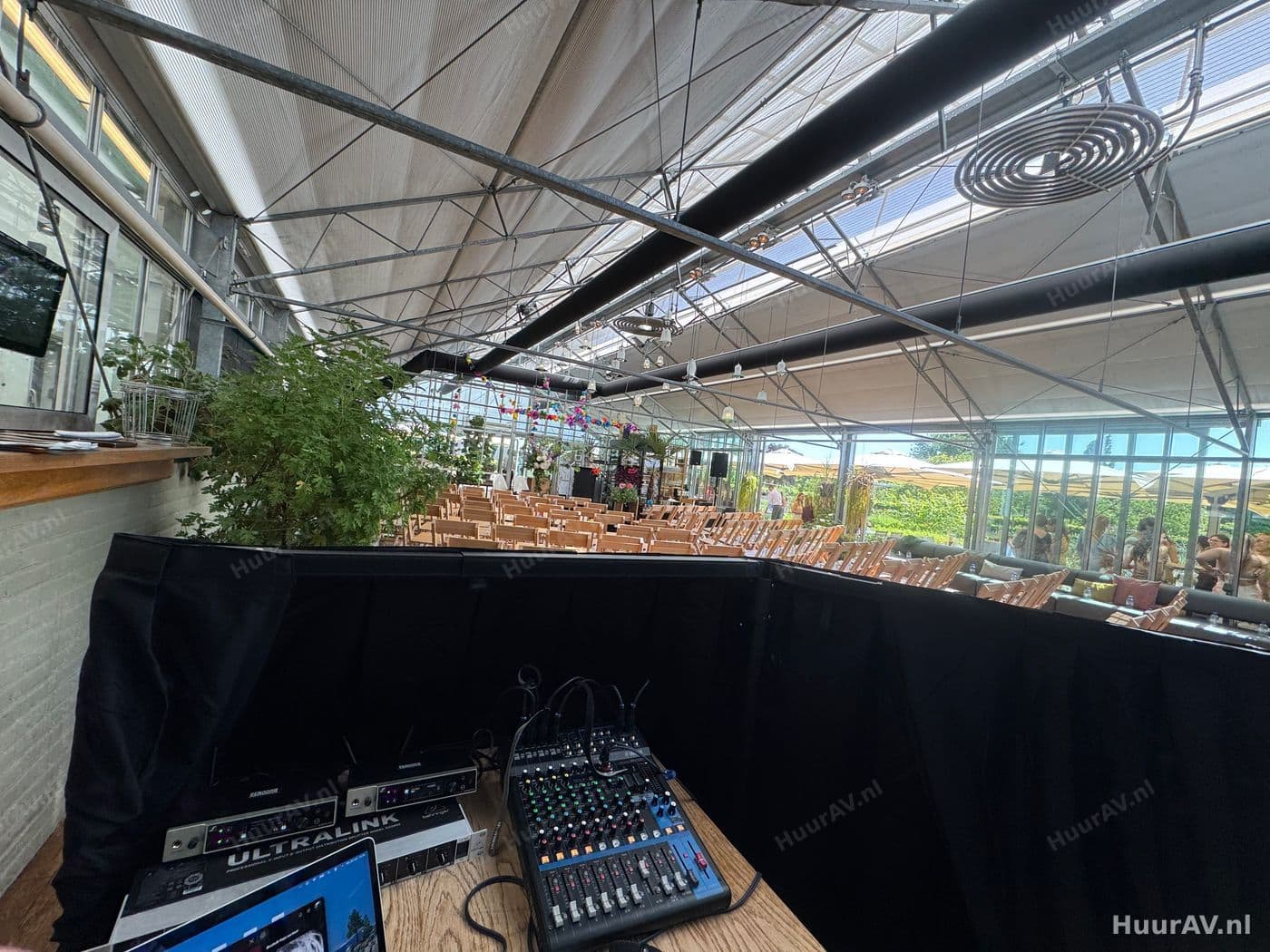
What a sound engineer does for you
A sound engineer is the person standing behind the mixing console who makes sure that everything your audience hears is right. That is more than operating knobs: it is listening, anticipating and adjusting at the moment it is needed. Where the equipment is the tool, the engineer is the professional who puts that tool to use at the right moment. Good technology is, after all, not only a matter of the right equipment, but above all of someone who deploys that equipment well at the right time. A system that is perfectly tuned beforehand can still start to shift during a living programme, and that is exactly when an engineer makes the difference.
The value lies in the combination of preparation and presence. Beforehand, the engineer thinks along about the layout, the microphones and the running order. During the programme, they keep the balance between speech, music and video audio in check, and step in the moment something falters. That way you, as the organiser, do not have to worry about the sound and can focus on your guests and your programme.
You can compare it to the difference between cruise control and an experienced driver. A fixed setting holds on the motorway, but does not respond to a bend, a traffic jam or a sudden downpour. An engineer drives along actively: they see what is coming and adapt to it. For a programme with people, music and moments that really matter, that is the difference between sound that happens to turn out well and sound you can rely on in advance. If you would like to know whether an engineer makes sense for your event, request a no-obligation quote.
Someone who watches the sound throughout
Good technology is about more than the right equipment. During a programme, all sorts of things change: one speaker talks softly, another steps away from the microphone, and the moment the music starts the balance needs to shift. A sound engineer keeps an eye on all of it and adjusts before your audience notices anything. That keeps everyone intelligible from start to finish.
That continuous monitoring is exactly what sets an engineer apart from a system you switch on yourself. A fixed setting does not account for the speaker who suddenly moves closer to the microphone, for the room that fills up and therefore sounds different, or for the band that starts a song louder. The engineer senses those changes and adjusts the mix to them unnoticed. The result is sound that stays natural and clear all evening, with no peaks, dead spots or moments when someone cannot be heard.
A full room, moreover, sounds different from an empty one. People absorb sound, which changes the acoustics the moment your guests arrive. A soundcheck in an empty space is therefore a starting point, not an end point. The engineer corrects the mix as the room fills and keeps doing so all evening, so the sound is right when the audience is there and not only during the test. The same goes for temperature, humidity and even the clothing of the guests, all factors that subtly influence the acoustics and that an engineer takes into account.
When you need a sound engineer
Not every event calls for an engineer. For a short speech with a single microphone you can often manage yourself after our briefing. But as soon as the programme becomes fuller, that changes. With multiple speakers, a panel discussion, live music or a combination of speech and image, the demands mount quickly, and then someone monitoring the mix is not a luxury but a necessity.
Think of a conference with rotating speakers and presentations, a gala with music and speeches, or a product launch with video, live music and a host. In all these cases there are transitions where the sound can stumble if no one is watching. The more sources and the more moments that really have to be right, the heavier the arguments for a dedicated engineer weigh.
The nature of your audience plays a part too. At a business gathering where the content is central, a single inaudible moment is enough to make people switch off. At a party or concert you want a mix that carries the energy without hurting the ears. An engineer tunes the sound to what your event needs. For a livestream or recording too, an engineer is important, because the online viewer deserves a clear mix just as much as the audience in the room. On our services page you can see how technical support goes hand in hand with the rest of your event.
Fast action when it counts
The value of an engineer shows the moment something goes wrong. A microphone that starts to feed back, a laptop that gives no sound, a speaker who suddenly talks much louder. An experienced engineer solves that in seconds. That is exactly the difference between a programme that runs smoothly and one that stumbles at the wrong moment.
Ideally, the audience notices nothing of it. A good engineer steps in so early and so subtly that a looming problem is solved before it becomes audible. Feedback is turned down before it squeals, a failing microphone is replaced by a backup that is already at hand, and an overly loud music start is pulled back immediately.
Behind that apparent calm lies constant alertness. The engineer not only listens but also watches: the speaker walking to the lectern, the band getting ready, the host giving a cue. By looking ahead, the mix is already right the moment a source begins, rather than having to be corrected afterwards. That alertness cannot be replaced by technology alone: it takes experience, knowledge of the sound system and the ability to stay calm under pressure. That is precisely what our engineers bring.
The HuurAV approach
We do not see a sound engineer as a stand-alone resource, but as the linchpin that connects your technology and your programme. Our engineers are experienced, think along and communicate clearly with the host, the speakers and the other suppliers. They arrive prepared: the running order has been gone through, the layout is known and the cues are coordinated, so there are no surprises on the day itself. That preparation is not a formality, but the basis on which a programme runs smoothly rather than turning into improvisation.
Because we have sound, light and image under one roof, the engineer can work seamlessly with the rest of the technology. With full technical support on location, there is one team and one point of contact watching over the entire programme. The engineer tunes the mix to the PA system and the wireless microphones, so everything functions as a whole.
The human side is just as important. An engineer is often in contact with the host and the speakers, and that communication has to be calm and clear, even when it gets busy. Our engineers know when to stay in the background and when to check in briefly with the organisation. That reliability and overview give you the room to focus on the content. If you are looking only for equipment without operation, you can turn to our Speaker Verhuur Amsterdam, where individual rental via SpeakerVerhuur.nl is possible.
Our process: from advice to support
Our process runs in fixed steps. It starts with advice: the engineer thinks along about the layout, the microphones and the running order, so the technology fits your programme. Next we handle delivery of the equipment, or coordinate with the set already on location.
On location comes the setup: the engineer positions and aims the speakers, connects all the sources to the mixing console and tucks the cabling away neatly. After that they run a full test, the soundcheck, in which they tune the sound to the acoustics and check that every spot in the room hears the speaker clearly. Where possible they run through the most important transitions with the speakers or the host in advance, so everyone knows what will happen.
During the programme comes the support: the engineer mixes live, monitors the balance and steps in the moment it is needed. They keep an eye on the cues, open the microphones at the right moment and make sure every transition between speech, music and image runs smoothly. Afterwards they break everything down again and leave the location tidy. Curious what that looks like in practice, take a look at our portfolio.
Common mistakes (and how to avoid them)
The most common mistake is thinking that good equipment operates itself. A fine set without someone listening and adjusting still delivers a variable result during a living programme. A second pitfall is involving the engineer only on the day itself, without a running order or coordination in advance. It is precisely that preparation that prevents most problems, because the engineer then knows what is coming and can follow the cues.
The engineer’s role in transitions is underestimated too. The moment the music fades and the speaker takes the floor, or a video starts, is exactly where the sound can stumble. An engineer handles those transitions smoothly, so your programme never grinds to a halt or falls into an awkward silence. Finally, organisers sometimes opt for one engineer for a programme that really calls for two, for example a livestream with both room and online sound. We advise honestly on that, so both image and sound get the attention they need.
Why HuurAV
Choosing HuurAV means choosing experienced engineers who react quickly and communicate clearly. We work with professionals who know how a programme runs, who anticipate what is coming and who stay calm when things get tense. Experience across a wide range of events, from intimate gatherings to large productions, means they know surprises before they happen. Amsterdam is our home base, but we provide technical support for events throughout the Netherlands, including on-site setup and breakdown.
Because we have all the disciplines in house, you do not have to switch between suppliers and you have one point of contact watching over the whole. Whether you need an engineer for a conference, a gala or a livestream, we make sure your sound is right from start to finish. And because the same engineer often handles the setup and breakdown too, there is a clear line from the first advice to the clean-up afterwards, with no loose ends.
If you would like to know what a sound engineer can mean for your event, get in touch or request a quote. We are happy to think along about the best setup, whether that is a single engineer for a compact gathering or a team handling sound, light and image together for a large programme.
Setup and soundcheck
The engineer sets up the audio rig, aims the speakers and runs a full soundcheck before you start.
Live mixing
During the programme the engineer keeps the balance between speech, music and video audio in check and adjusts wherever needed.
Quick response
In case of feedback, a failing microphone or an unexpected change, the engineer steps in immediately, without your guests noticing a thing.
Coordination with the programme
The engineer coordinates with the host, speakers and other suppliers, so cues and transitions run smoothly.
Advice in advance
Ahead of your event, the engineer thinks along about the right layout, microphones and running order.
Frequently asked questions
When do I need a sound engineer?
For a full programme, multiple speakers, live music or a livestream, an engineer is recommended. For a short speech with a single microphone you can often manage yourself after our instructions.
What exactly does a sound engineer do during the event?
The engineer handles the setup, runs the soundcheck and mixes the audio live during the programme: the balance between speakers, music and video, and stepping in the moment something goes wrong.
Can one engineer also take care of the visuals?
At smaller events an engineer can combine audio and visuals. For a complex programme with multiple rooms or a livestream, we recommend a second engineer, so both picture and sound get the attention they need.
Do your engineers work throughout the Netherlands?
Yes. From Amsterdam we provide technical support for events throughout the Netherlands.
Can I hire an engineer with my own equipment?
Yes. Our engineer can work with your equipment or a rented set. We discuss in advance what equipment is there, so the engineer arrives prepared and with the right expectations.
How far in advance should I book a sound engineer?
For most events we recommend booking a few weeks ahead, so there is time for advice and going through the running order. The calendar fills up in high season, so booking early gives the most certainty.
Ready to organise your hire a sound engineer?
Tell us what you are organising. We translate your programme, venue and wishes into a clear technical proposal.